How often should I feed my cat?
By Pawculations Team · Cats · Updated
Summary: Until six months old, kittens usually do best on three meals a day. From six months to a year, twice daily. Adult cats do fine on one or two meals a day, though the feline medicine association’s consensus leans toward several smaller meals, closer to how cats naturally eat. Frequency is only half the answer; the other half is portion, and the cat food portion calculator does that math for you.
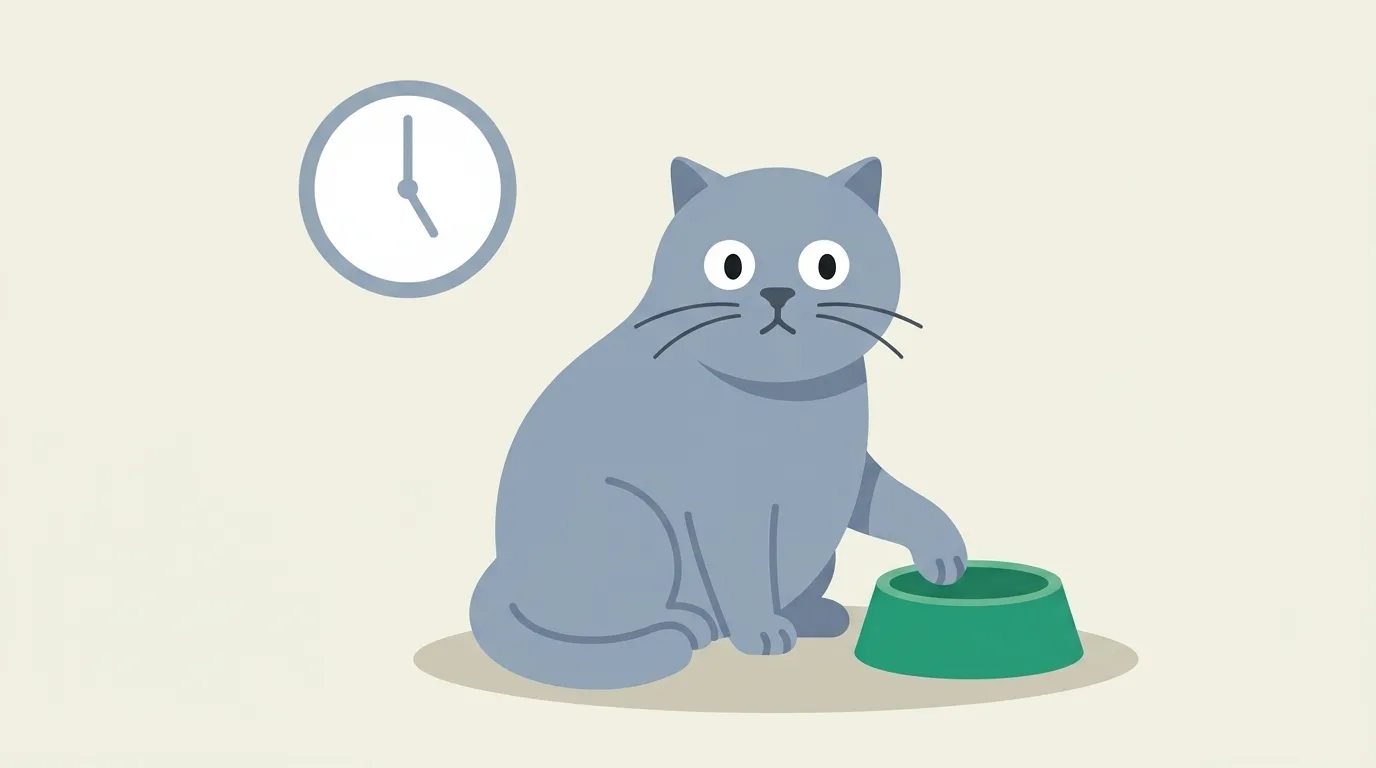
It’s 5am and someone furry is explaining, at volume, that breakfast is late. Feeding schedules are one of the few things your cat has strong opinions about, so it’s worth knowing what the veterinary guidance actually says, and where your cat is simply negotiating.
Already know the schedule and need the amounts? The cat food portion calculator turns weight and life stage into cans and cups per day.
In this article
- Meals per day, by age
- The case for smaller, more frequent meals
- Free feeding: who it works for
- What time should meals happen?
- Frequency is half the answer
- FAQ
Meals per day, by age
Cornell’s Feline Health Center gives the cleanest age-based guidance [1]:
| Age | Meals per day | Why |
|---|---|---|
| Kitten, under 6 months | 3 | Kittens need more food per pound than adults to fuel growth |
| 6 to 12 months | 2 | Growth slows; appetite steadies |
| Adult (1 year+) | 1 to 2 | “Feeding once or twice a day is appropriate in most cases” |
| Senior (10+) | Same as adult | Keep the routine unless your vet says otherwise |
Until six months old, kittens do best on three meals a day; most adult cats settle happily at two. Health conditions rewrite the table: diabetic cats, cats with kidney disease, and cats on weight-loss plans get their schedules from a vet, not from a chart.
The case for smaller, more frequent meals
The American Association of Feline Practitioners’ consensus statement on feline feeding takes the cat’s-eye view [2]: a natural feline day involves many small hunts, so several small meals spread across the day fit feline behavior better than one or two large ones. Food puzzles and timed feeders can deliver that without you becoming a full-time prey animal.
The two recommendations are compatible. Cornell’s numbers are a floor for a healthy routine; the AAFP’s point is that if you can split the same daily portion into more, smaller servings, your cat’s body and brain are built for exactly that. The key phrase is the same daily portion: more meals is enrichment, more food is a weight problem.
Free feeding: who it works for
Leaving dry food out all day works for some cats and quietly ruins others. Cornell’s guidance: free feeding “may be acceptable for some cats, but for others, it can result in overeating and inappropriate weight gain” [1]. The honest sorting test is your cat’s waistline, and a grazer who stays lean has earned the privilege.
Two practical limits. Freshness: dry food left out should still be replaced daily. And wet food can’t free-feed at all; at 70 to 80 percent water [1], it spoils at room temperature within hours, so it belongs on a meal schedule.
What time should meals happen?
Cats run on consistency more than clock time. Pick meal times you can hit every single day, including weekends, and space a two-meal schedule roughly 12 hours apart. One warning from hard experience: whatever time you feed breakfast is the time your cat will enforce, permanently, with interest. If 5am negotiations are already happening, shift breakfast later in small steps, or let an automatic feeder take the blame.
Frequency is half the answer
A perfect schedule delivering the wrong amount is still the wrong diet, and the feeding instructions on the bag are calibrated for the average cat, which may be more active than yours [1]. Work out the actual daily portion from weight and life stage with the cat food portion calculator, then split it across however many meals your schedule uses. Raising a kitten? Pair the schedule with the growth check in how much should a kitten weigh.
FAQ
How many times a day should I feed my cat? Once or twice a day is appropriate for most healthy adult cats, per Cornell [1]. Kittens under six months need three meals; cats aged six months to a year do best on two.
Is it OK to feed a cat once a day? For most healthy adults, yes. The AAFP’s behavioral guidance still favors splitting the same amount into more, smaller meals when you can [2], and cats with medical conditions need whatever schedule their vet prescribes.
Can I leave wet food out all day? No. Wet food is 70 to 80 percent water [1] and spoils at room temperature within hours. Serve it as meals and refrigerate or discard what’s left.
Why is my cat always begging for food? First, rule out an actual shortfall by checking the daily portion against the portion calculator. A cat eating the right amount who still campaigns is usually bored, habituated, or training you: food puzzles, scheduled play, and a feeder with a timer break the association between you and the bowl. Sudden genuine appetite changes in either direction are a vet conversation.
Do senior cats need a different feeding schedule? Not by default: Cornell advises keeping the adult routine for cats 10 and older unless a vet directs otherwise [1]. What changes more often in the senior years is the diet itself, especially with kidney disease or diabetes in the picture.
The schedule is the easy half; the portion is where the health lives. Get your cat’s actual daily amount in cans and cups with the cat food portion calculator, then let the 5am lobbyist negotiate with the automatic feeder.
Sources
* This article draws on published veterinary sources, but it's for education and curiosity, not veterinary advice. Every pet is different; talk to your vet about what's right for yours.